How to Manage Local Deliveries with Two to Five Vans
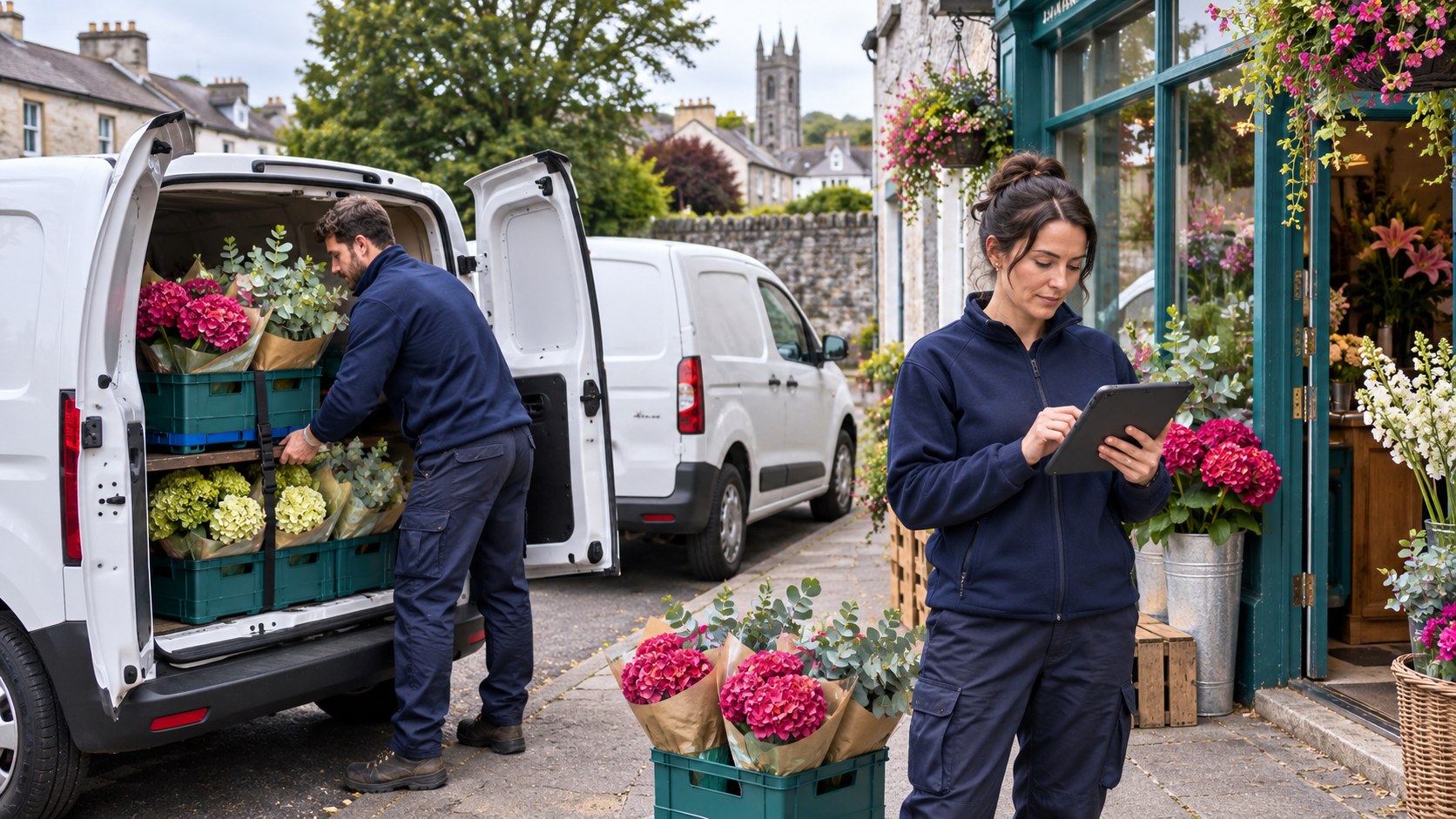
Running deliveries with two to five vans can quickly become a coordination challenge. Orders arrive through different channels, drivers need instructions and customers want to know where their delivery is.
A clear daily process helps everyone understand what needs to happen, who is responsible and what has been completed.
Here is a practical way to organise local deliveries without adding unnecessary administration.
1. Put every delivery in one place
Start with a single list of the jobs your team needs to complete. Avoid leaving essential details scattered across messages, emails and handwritten notes.
For each job, record:
- Customer name and contact number.
- Collection and delivery addresses.
- Requested dates or time windows.
- What needs to be collected or delivered.
- Access instructions or handling requirements.
- Any proof required when the job is completed.
Check missing details before assigning the work. An unclear entrance or incorrect phone number can disrupt an otherwise straightforward delivery.
2. Plan around your real constraints
The shortest route is not always the most practical route.
Before dividing the work between vans, consider delivery windows, vehicle capacity, loading time and how long each stop is likely to take. Include collections that must happen before a delivery can be completed.
For example, a florist with three vans might group orders by area, then adjust those groups for timed deliveries and larger arrangements.
Leave room for delays. A plan that depends on every stop going perfectly gives your team little flexibility when something changes.
3. Give each job a clear owner
Every job should have an assigned driver before it leaves the business.
Drivers need to know:
- Which jobs they are responsible for.
- Where they need to go.
- What they are collecting or delivering.
- Which instructions matter at each stop.
- What to do if they cannot complete the job.
When work moves between drivers, update the shared record. Make it clear who owns the job now so it is neither missed nor attempted twice.
4. Keep delivery status visible
Your team should be able to distinguish work that is waiting, assigned, underway, completed or unsuccessful.
That shared view helps the person answering customer enquiries give an accurate update without repeatedly interrupting drivers.
If a delivery cannot be completed, record the reason and the next action. A failed attempt still needs an owner: someone must decide whether to contact the customer, arrange another attempt or return the goods.
5. Capture useful proof of delivery
Agree what evidence your business needs when a collection or delivery is completed.
Depending on the job, this might include a photograph, recipient name or signature, alongside the completion time.
Give drivers clear instructions about what to capture. The evidence should help your team understand what happened and answer a customer query later.
Keep delivery notes with the job record rather than relying on a separate message that may be difficult to find.
6. Review the unfinished work before closing
At the end of the day, check which jobs remain open and why.
Confirm that completed jobs have the required proof. Review unsuccessful attempts and assign a next action to each outstanding job.
Look for repeated problems:
- Missing or inaccurate addresses.
- Delivery windows that are difficult to meet.
- Uneven workloads between drivers.
- Recurring access difficulties.
- Missing completion evidence.
Use those observations to improve the next day’s plan. Start by fixing the problem that causes the most disruption.
Bring every delivery into view
Turbo Last Mile brings job creation, driver assignment, delivery status and proof of delivery into one platform.
For businesses running their own deliveries, that means a shared place to coordinate the work—from the first job created to the final delivery confirmed.
Published
17 Nov 2026
Updated at
17 Nov 2026
Author
Turbo Last Mile
Topic
Delivery Guides
#local delivery management, #small business deliveries, #delivery planning, #driver management, #proof of delivery